Easter Island, or Rapa Nui, is one of the most remote inhabited places on Earth: a small volcanic island in the Pacific, more than 3,500 km off the coast of Chile, guarded by the moai, the giant stone statues carved by its ancestors. It is also one of the most rewarding trips in South America, if you know the rules. Since the island reopened in 2022, every visit to its archaeological sites must be made with an accredited guide.
Getting thereFlights from Santiago de Chile
Time needed4 days; 3 at the very least
Park ticketUS$100 adults, US$40 children (foreign visitors)
GuideMandatory at the park’s archaeological sites
Best monthsMarch–April and October–December
This guide explains the entry rules for 2026–27, the sites you should not miss, how many days to plan, when to go and how to combine Rapa Nui with mainland Chile, with sample itineraries you can adapt.
Easter Island rules for 2026–27: what every visitor needs
Rapa Nui protects its heritage and its small community with clear rules. Plan them before you book anything:
| Requirement | What you need | Who handles it |
|---|---|---|
| Entry form (FUI) | The Single Entry Form for Rapa Nui, completed online within 48 hours before your flight | You, with our help |
| Return ticket | A round trip with a stay of up to 30 days, counting arrival and departure days; it cannot be extended | We book it with your trip |
| Accommodation | A booking at a hotel registered with SERNATUR, or an invitation letter from a resident | We book it with your trip |
| National Park ticket | US$100 for foreign adults and US$40 for foreign children, valid 10 consecutive days | Bought online from the park’s official site |
| Accredited guide | Mandatory at the park’s archaeological sites | We book your guide |
- The guide rule. Rapa Nui National Park covers most of the island. Its archaeological sites can only be visited with a guide accredited by Ma’u Henua, the Rapa Nui community organisation that manages the park. A few places, such as the Tahai complex in Hanga Roa and Anakena beach, can be enjoyed on your own.
- Smaller groups. Since 1 October 2026, Ma’u Henua allows a maximum of 15 visitors per guide at the busiest sites, such as Rano Raraku, Ahu Tongariki, Anakena and Orongo.
- The park ticket. It is sold on the official Rapa Nui National Park website. Choose the ticket for foreign visitors; it is valid for 10 consecutive days, with one entry each to Rano Raraku and Orongo and unlimited visits to the other sites.
- The entry form. The FUI is completed on the Chilean government portal within 48 hours before your flight, and is checked when you board. See the full list of requirements on chile.travel.
- Respect the moai. Never touch the statues or walk on the ahu, the stone platforms. They are sacred to the Rapa Nui, and the fines are high.
The essential sites of Rapa Nui
There are more than 900 moai on the island. These are the sites we include in every trip:
| Site | What you see | Allow | Good to know |
|---|---|---|---|
| Rano Raraku | The volcano quarry where the moai were carved, with about 400 statues in every stage of work | About 2 hours | One entry per park ticket |
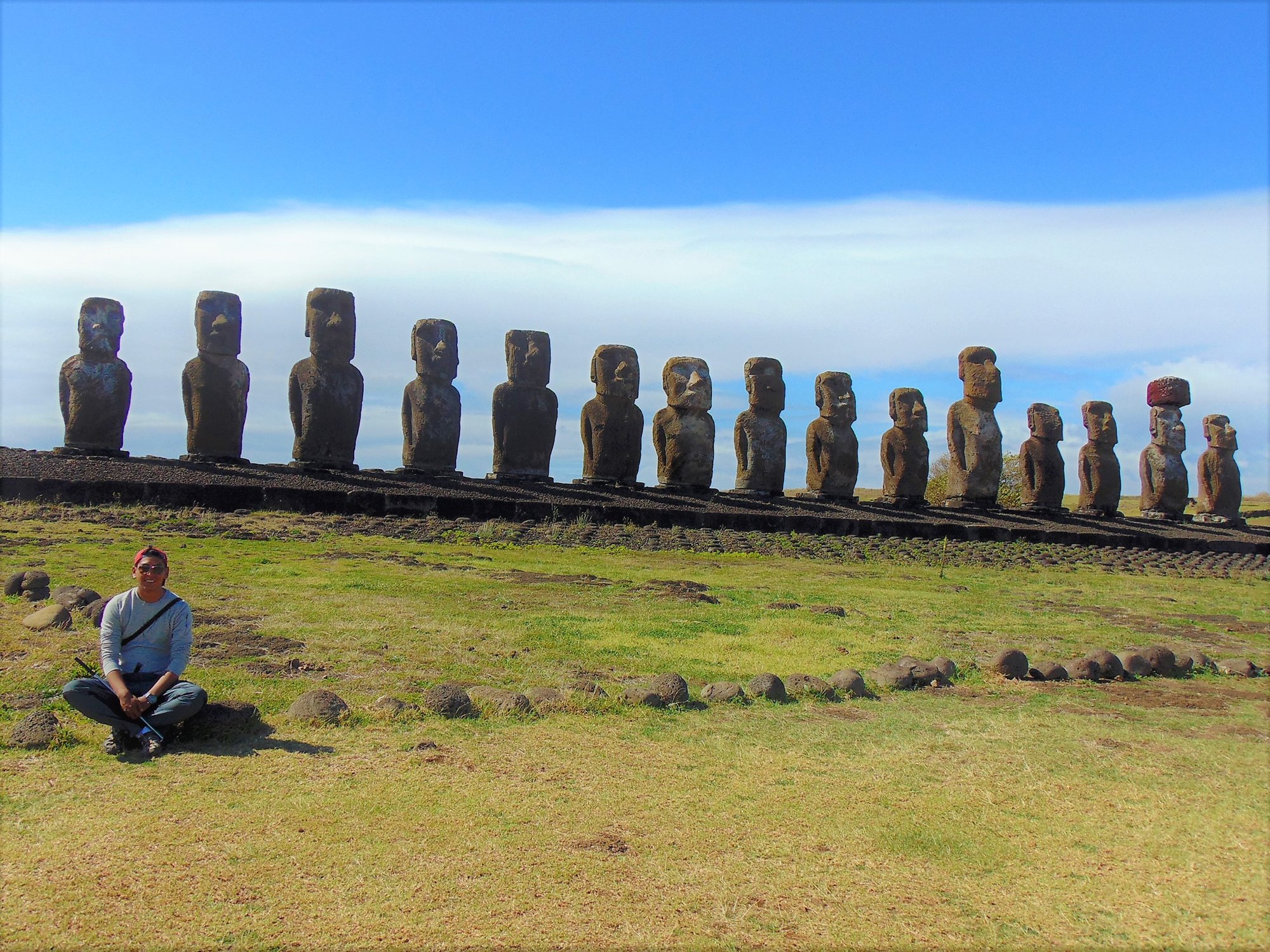
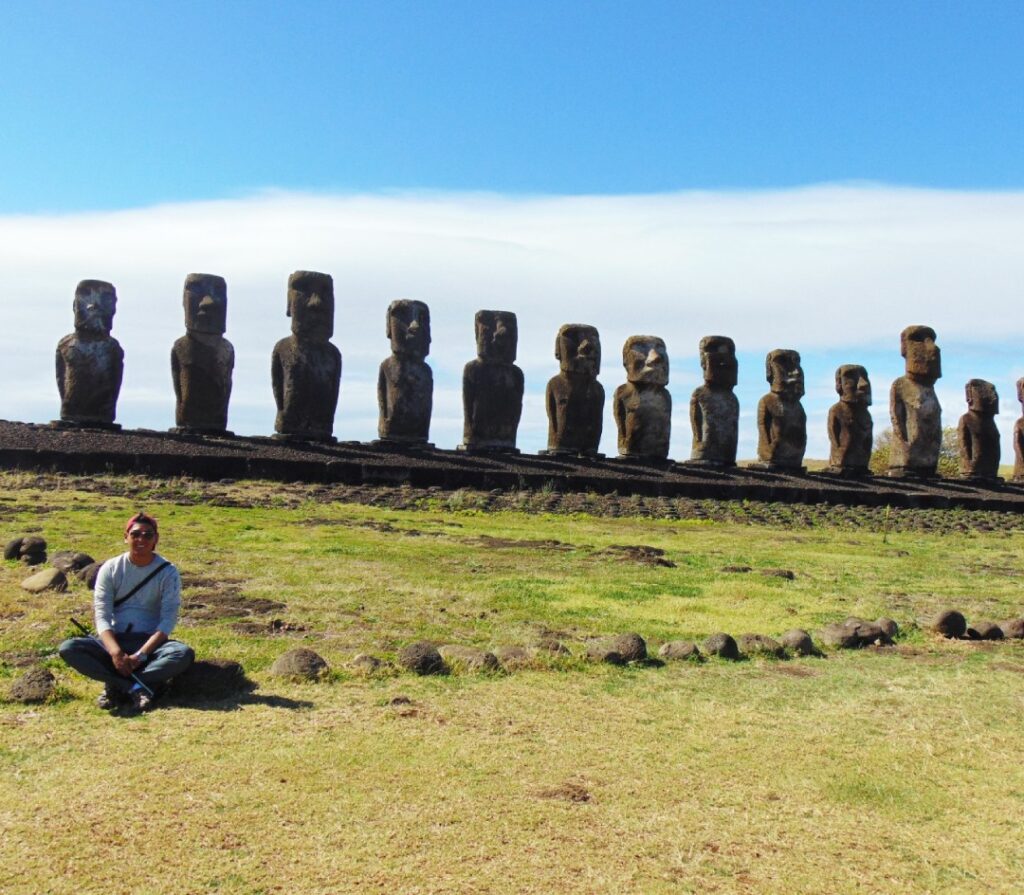
| Ahu Tongariki | The largest ceremonial platform on the island, with 15 restored moai | About 1 hour | The classic sunrise visit |
| Orongo and Rano Kau | The ceremonial village of the Birdman cult on the rim of the Rano Kau crater | About 2 hours | One entry per park ticket |
| Anakena | A white sand beach with the moai of Ahu Nau Nau, where King Hotu Matu’a is said to have landed | Half a day | Bring a swimsuit |
| Ahu Akivi | Seven moai, the only ones on the island that look towards the sea | About 45 minutes | Aligned with the sun at the equinoxes |
| Puna Pau | The red stone quarry of the pukao, the topknots placed on the moai | About 45 minutes | Usually combined with Ahu Akivi |
| Tahai | Three restored platforms next to Hanga Roa, facing the ocean | About 1 hour | The best sunset on the island |
Rano Raraku, the moai quarry
Almost every moai on the island was carved from the soft volcanic rock of this crater. Walking among the statues, some finished and buried to the shoulders, others still lying in the rock where the carvers left them, is the most moving experience on Rapa Nui. Because the ticket allows only one visit, we plan it with time to spare and in the best light of the day.
Ahu Tongariki at sunrise
Fifteen moai stand with their backs to the sea on the largest ahu on the island. The sun rises behind them, and arriving in the dark with your guide to watch the first light on the statues is the image most travellers take home.
Orongo and the Birdman
On the rim of the Rano Kau crater, between a lake of reeds and a cliff over the ocean, the stone houses of Orongo tell the story of the Tangata Manu, the Birdman competition. Every year, young men swam to the islet of Motu Nui to bring back the first egg of the sooty tern, and their chief ruled the island for a year.
Anakena and the beaches
Anakena is the island’s white sand beach, with palm trees and the moai of Ahu Nau Nau, some of the best preserved on the island. It is the perfect place to end a day of sites with a swim.
How many days do you need on Easter Island?
Plan four days. Three days are enough to see the main sites if the weather is good, but a fourth day gives you a sunrise at Tongariki, time to swim or dive and a spare day for rain. With five days you can add hiking, horseback riding and diving at a relaxed pace.
4 days on Easter Island: sample itinerary
- Day 1: Fly from Santiago, check in and watch the sunset at Tahai.
- Day 2: The south and east coast with your guide: the fallen moai of the coast, Rano Raraku and Ahu Tongariki, then an afternoon on Anakena beach.
- Day 3: Orongo and the Rano Kau crater, Ahu Akivi and Puna Pau; free afternoon for the museum in Hanga Roa or snorkelling.
- Day 4: Sunrise at Ahu Tongariki, then fly back to Santiago.
All flights to Easter Island leave from Santiago, so we plan at least one night in Santiago before or after the island.
Overland, train or boatFlight
Combine Easter Island with mainland Chile
Because every flight connects through Santiago, Rapa Nui fits naturally into a Chile trip:
- Easter Island and the Atacama Desert (10 days): Santiago (2 nights), Easter Island (4 nights), San Pedro de Atacama (3 nights), then home. The moai and the driest desert outside the poles, under some of the clearest skies on Earth.
- Easter Island and Patagonia (12–14 days): add Torres del Paine for granite towers, glaciers and the best hiking in South America. See our guide to Patagonia hiking tours.
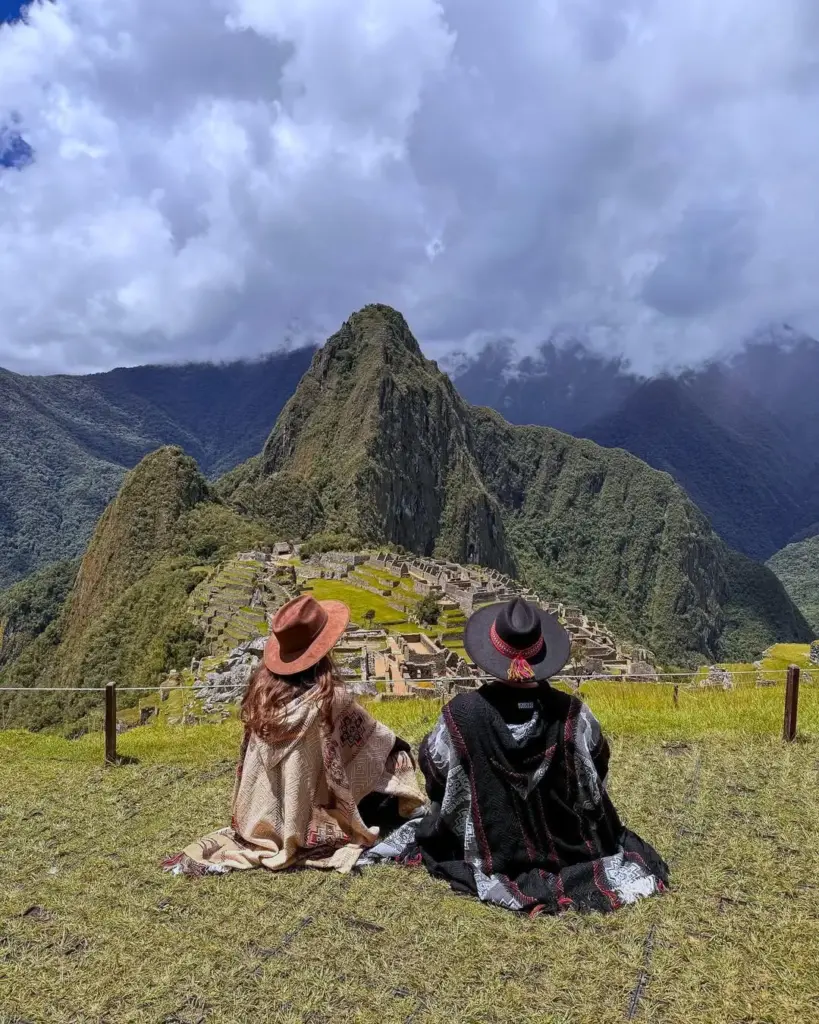
- Easter Island with Peru: fly from Lima to Santiago and on to the island to combine the two great mysteries of the Andes and the Pacific, Machu Picchu and the moai.
Overland, train or boatFlight
Our Chile Highlights (13 days) itinerary, from the Atacama to Patagonia, can include Easter Island. See all our Chile tours, or read about the island among the 25 best places to visit in South America.
When to visit Easter Island
| Months | Weather | Crowds | Our advice |
|---|---|---|---|
| January–February | Summer: the warmest months | High | Tapati Rapa Nui, the island’s great festival, usually runs from late January into February; book many months ahead |
| March–April | Warm sea and pleasant days | Moderate | Our favourite time: summer weather with fewer visitors |
| May–September | Cooler, with wetter spells | Low | Quiet and good value; plan a spare day for rain |
| October–December | Spring: mild and increasingly sunny | Moderate | A great choice to combine with Patagonia and the Atacama |
The island is subtropical, with mild temperatures all year and rain possible in any month, usually in short showers. The sea is warmest in February and March.
Where to stay on Easter Island
All hotels are in or near Hanga Roa, the only town. Choose between an all-inclusive lodge, where guided explorations, meals and transfers are included, and a boutique hotel in town, where you add private guides for each day. Rooms are limited and the island has strict rules on accommodation, so book early, especially for January and February.
Things to do on Easter Island beyond the moai
- Snorkelling and diving: the water around Rapa Nui is among the clearest in the Pacific.
- Hiking: climb Maunga Terevaka, the highest point of the island, for a view of the whole island and the ocean around it.
- Horseback riding across the north coast with a local guide.
- Culture: the anthropological museum in Hanga Roa and a traditional Rapa Nui dance show.
- Tapati Rapa Nui: two weeks of competitions, music and dance, usually from late January into February.
Why visit Easter Island with a private guide?
- It is required at the archaeological sites, so the real choice is between a group tour and a guide of your own.
- Your timing: sunrise at Tongariki, Rano Raraku in the best light and the busiest sites outside the peak hours.
- The stories: an accredited guide explains the history, the legends and the language of the Rapa Nui, and why the moai matter to the island today.
- No paperwork worries: we coordinate flights, hotel, park ticket and guide so that your entry requirements are in order.
Tell us how you would like to travel and we will design your trip: start planning your Easter Island trip.
Frequently asked questions
Do you need a guide on Easter Island?
Yes. Since the island reopened to tourism in 2022, the archaeological sites of Rapa Nui National Park can only be visited with a guide accredited by Ma’u Henua, the community organisation that manages the park. A few places, such as Tahai and Anakena beach, can be visited on your own.
How much is the Easter Island National Park ticket?
US$100 for foreign adults and US$40 for foreign children. It is valid for 10 consecutive days, with one entry each to Rano Raraku and Orongo.
How many days do you need on Easter Island?
Four days is ideal: enough for all the main sites, a sunrise at Ahu Tongariki and a spare day for the weather. Three days is the minimum.
How do you get to Easter Island?
By plane from Santiago de Chile, the only gateway to the island. Plan a night in Santiago before or after your stay on Rapa Nui.
What do you need to enter Easter Island?
The online FUI entry form, completed within 48 hours before your flight, a return ticket for a stay of up to 30 days, and a booking at a registered hotel or an invitation letter from a resident.
What is the best time to visit Easter Island?
March and April, and October to December, combine good weather with fewer visitors. January and February are the warmest and busiest months, with the Tapati festival.
Can I rent a car on Easter Island?
You can drive around the island, but you need an accredited guide to enter the archaeological sites, so most travellers explore with a guide who also provides the transport.
Is Easter Island part of Chile?
Yes. Rapa Nui is a special territory of Chile, with its own Polynesian culture and language. The currency is the Chilean peso.
Ready to Experience This Firsthand?
Our travel consultants in Cusco design your itinerary around your dates, pace and hotel style.

Wilfredo Zúñiga Huamanguillas
Anthropologist & Hospitality Professional | South America Travel ExpertAnthropologist, hospitality professional and South America travel expert with 11 years of experience in tourism, trained at the Universidad Nacional de San Antonio Abad del Cusco. Wilfredo writes about the people, traditions and landscapes of the continent, from the Andes and Machu Picchu to Patagonia, Brazil and the Amazon.
More about Wilfredo →