The short answer: once you are above 3,000 m, sleep no more than 500 m higher than the night before, and avoid going from below 1,200 m to above 3,500 m in a single day. That is the advice of the NHS, the CDC Yellow Book and TravelHealthPro. What counts is the altitude where you sleep, not the highest point you visit during the day. Use the planner below to see every night of your route through Peru, Bolivia, Ecuador, Chile or Argentina checked against these rules. Start from one of our journeys or build your own route.
This planner is a planning aid, not medical advice. Speak to a doctor or travel clinic before you travel to high altitude, above all if you have a heart or lung condition, are pregnant or have had altitude sickness before.
We assume you arrive from low altitude, such as your home city or a flight from the coast.
| Night | Where you sleep | Altitude | Check |
|---|
How the planner checks your route
For every night, the planner compares where you sleep with where you slept the night before. Each night gets a colour:
| Colour | What it means | Source of the rule |
|---|---|---|
| Green | Within all the guidance below | — |
| Blue | From low altitude to between 2,750 m and 3,000 m in one day. This is within the NHS and TravelHealthPro limit of 3,500 m, but over the stricter CDC limit of 2,750 m | CDC |
| Amber | Above 3,000 m, a night more than 500 m higher than the night before. Also amber: a fourth night in a row that is higher than the last, with no rest day | NHS, CDC and TravelHealthPro |
| Red | Straight from low altitude to above 3,000 m, or a gain of more than 1,000 m in one night above 3,000 m | NHS, CDC and TravelHealthPro |
Two more points shape the results:
- Sleeping altitude is what counts. TravelHealthPro measures its risk levels by the altitude at which you sleep, and the CDC notes that the body is most short of oxygen during sleep. A day trip higher up, followed by a night lower down, is how most routes in the Andes work.
- Rest days. At 3,000 m or more, the NHS and TravelHealthPro advise a rest day at the same altitude every three to four days. A second night in the same place counts as one. The CDC adds an extra night for every 1,000 m you gain.
The planner assumes you arrive from low altitude. It uses the altitude of each town centre, so your hotel may be a little higher or lower. Where hotels differ a lot, as in the Southern Lípez, it uses the highest.
Sleeping altitude of the main places in the Andes
These are the places in the planner at 1,500 m or more, which TravelHealthPro calls high altitude, from lowest to highest. Coastal cities such as Lima, Santiago, Buenos Aires and Rio de Janeiro, the Amazon and Patagonia are all well below 1,500 m.
| Place | Country | Sleeping altitude | Notes |
|---|---|---|---|
| Baños | Ecuador | 1,820 m (5,970 ft) | High altitude. |
| Machu Picchu town (Aguas Calientes) | Peru | 2,040 m (6,690 ft) | High altitude. |
| Purmamarca | Argentina | 2,320 m (7,610 ft) | High altitude. |
| Arequipa | Peru | 2,330 m (7,640 ft) | High altitude. |
| San Pedro de Atacama | Chile | 2,400 m (7,870 ft) | High altitude. |
| Otavalo | Ecuador | 2,530 m (8,300 ft) | High altitude. |
| Cuenca | Ecuador | 2,560 m (8,400 ft) | High altitude. |
| Riobamba | Ecuador | 2,750 m (9,020 ft) | High altitude. |
| Ollantaytambo | Peru | 2,790 m (9,150 ft) | High altitude. |
| Sucre | Bolivia | 2,800 m (9,190 ft) | High altitude. |
| Quito | Ecuador | 2,850 m (9,350 ft) | High altitude. |
| Sacred Valley (Urubamba) | Peru | 2,870 m (9,420 ft) | High altitude. |
| Huaraz | Peru | 3,050 m (10,010 ft) | High altitude; the 500 m rule applies when you move up. |
| Cusco | Peru | 3,400 m (11,150 ft) | High altitude; the 500 m rule applies when you move up. |
| Cotopaxi haciendas | Ecuador | About 3,600 m (11,810 ft) | Very high altitude; the 500 m rule applies when you move up. Hacienda El Porvenir is at about 3,600 m. Other haciendas near the park vary. |
| Colca Canyon (Chivay) | Peru | 3,630 m (11,910 ft) | Very high altitude; the 500 m rule applies when you move up. |
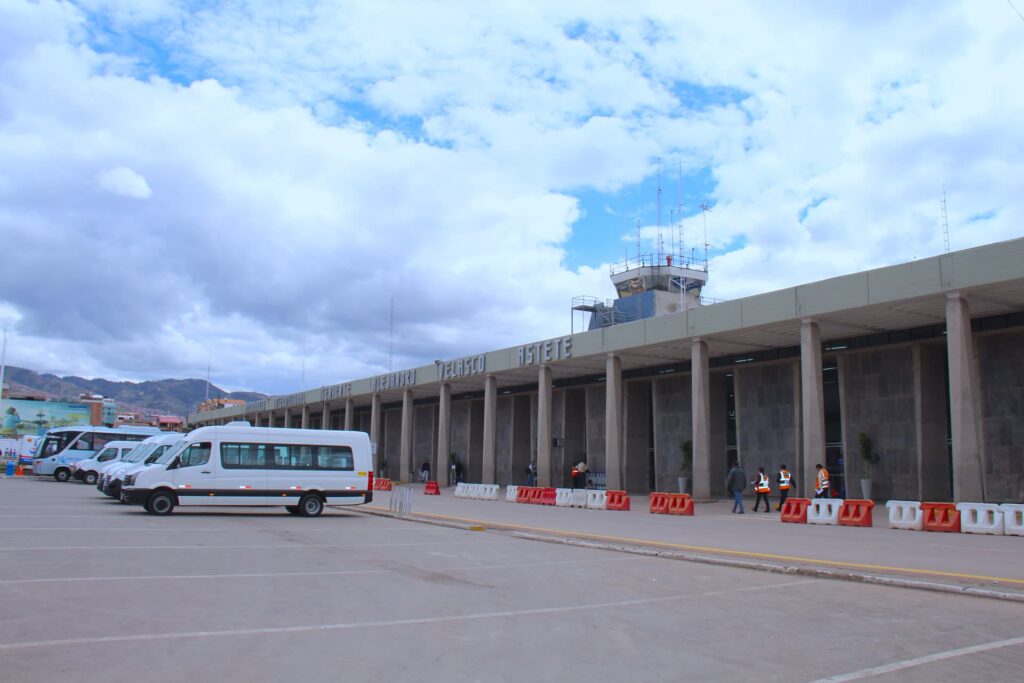
| La Paz | Bolivia | 3,650 m (11,980 ft) | Very high altitude; the 500 m rule applies when you move up. City centre. El Alto, where the airport is, is at about 4,060 m. |
| Uyuni and the salt-flat hotels | Bolivia | 3,660 m (12,010 ft) | Very high altitude; the 500 m rule applies when you move up. |
| Puno (Lake Titicaca) | Peru | 3,830 m (12,570 ft) | Very high altitude; the 500 m rule applies when you move up. |
| Copacabana (Lake Titicaca) | Bolivia | 3,840 m (12,600 ft) | Very high altitude; the 500 m rule applies when you move up. |
| Potosí | Bolivia | 4,070 m (13,350 ft) | Very high altitude; the 500 m rule applies when you move up. |
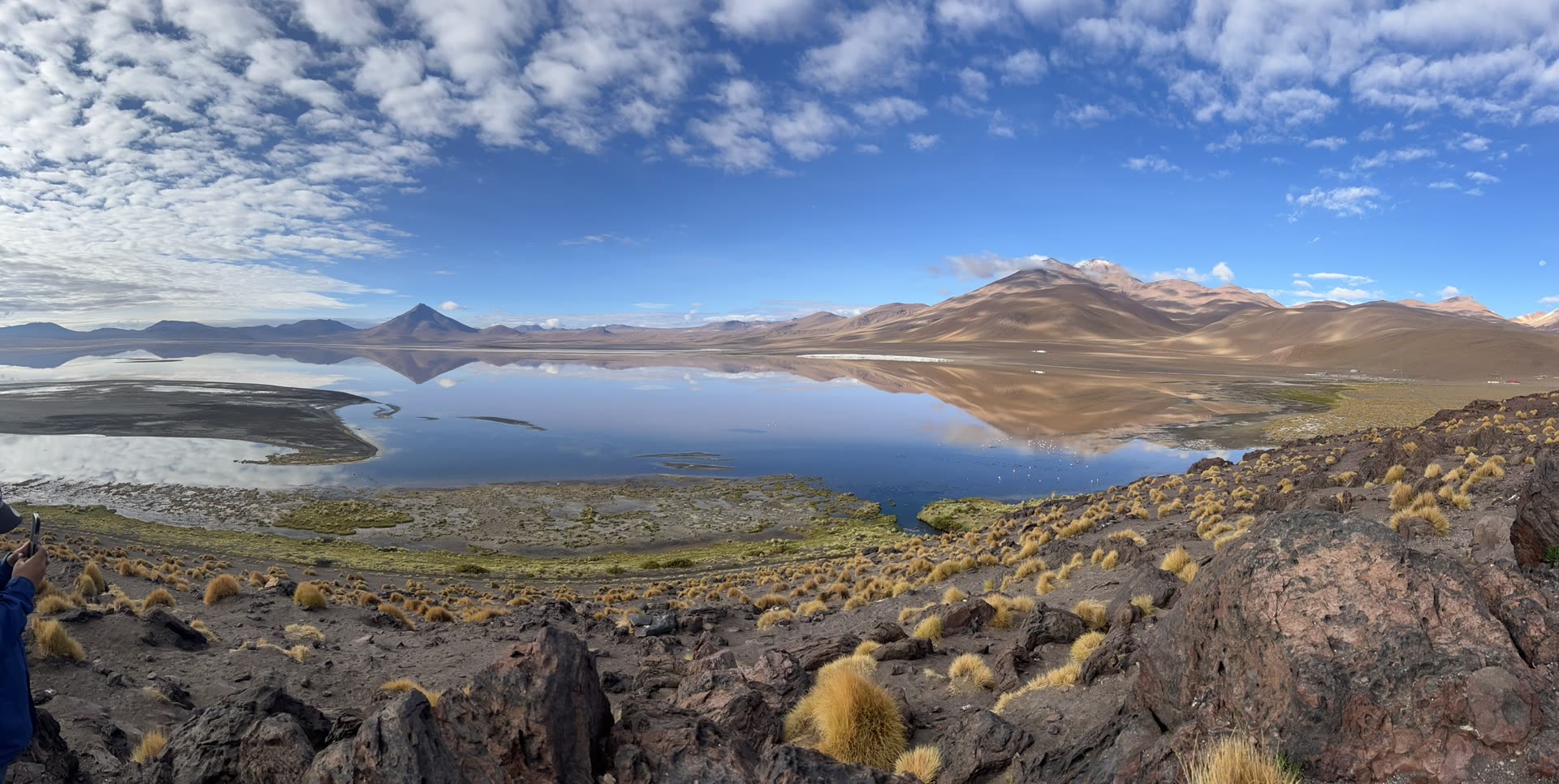
| Southern Lípez lodges (Uyuni to Atacama route) | Bolivia | Up to about 4,600 m (15,090 ft) | Very high altitude; the 500 m rule applies when you move up. Tayka del Desierto is at about 4,600 m. Some lodges on this route are lower: ask which one you are booked into. |
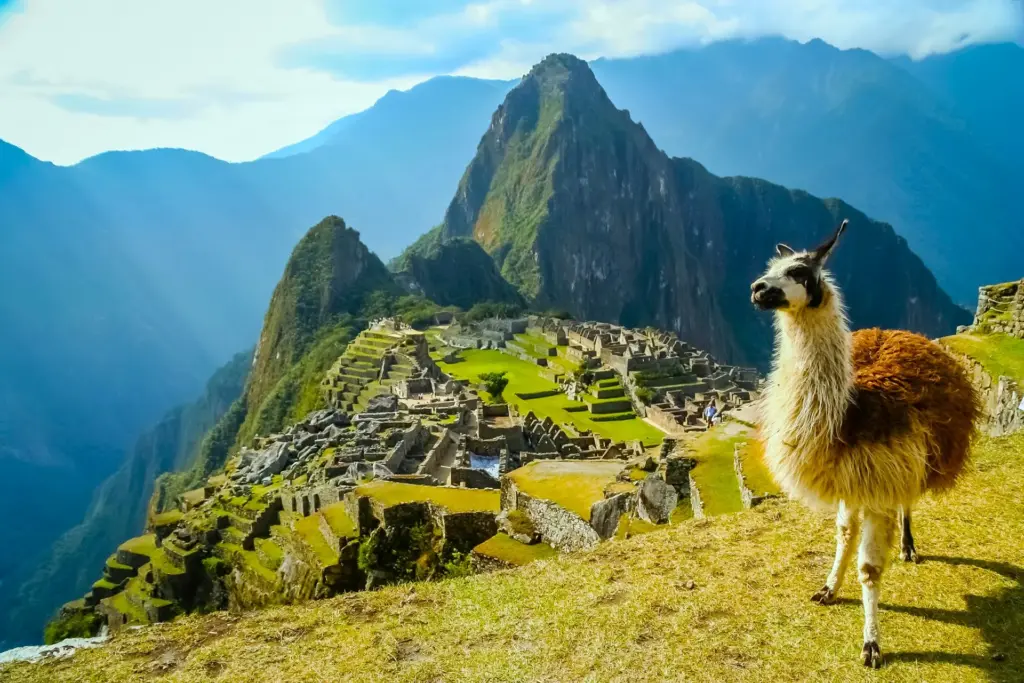
Three figures surprise many travellers. Machu Picchu, at about 2,430 m, is around 1,000 m lower than Cusco. La Paz is higher than Cusco, and its airport in El Alto is higher still, at about 4,060 m. And the highest night on the classic route through Bolivia is not in a city at all: it is a lodge in the Southern Lípez, on the way from Uyuni to the Atacama Desert.
Day trips that go higher than where you sleep
Several of the best days in the Andes climb well above your hotel and come back down in the afternoon. They do not change your sleeping altitude, but you feel them, so plan them for after a few nights at altitude.
| Day trip | Highest point | Where you sleep |
|---|---|---|
| Rainbow Mountain | About 5,000 m | Cusco, about 3,400 m |
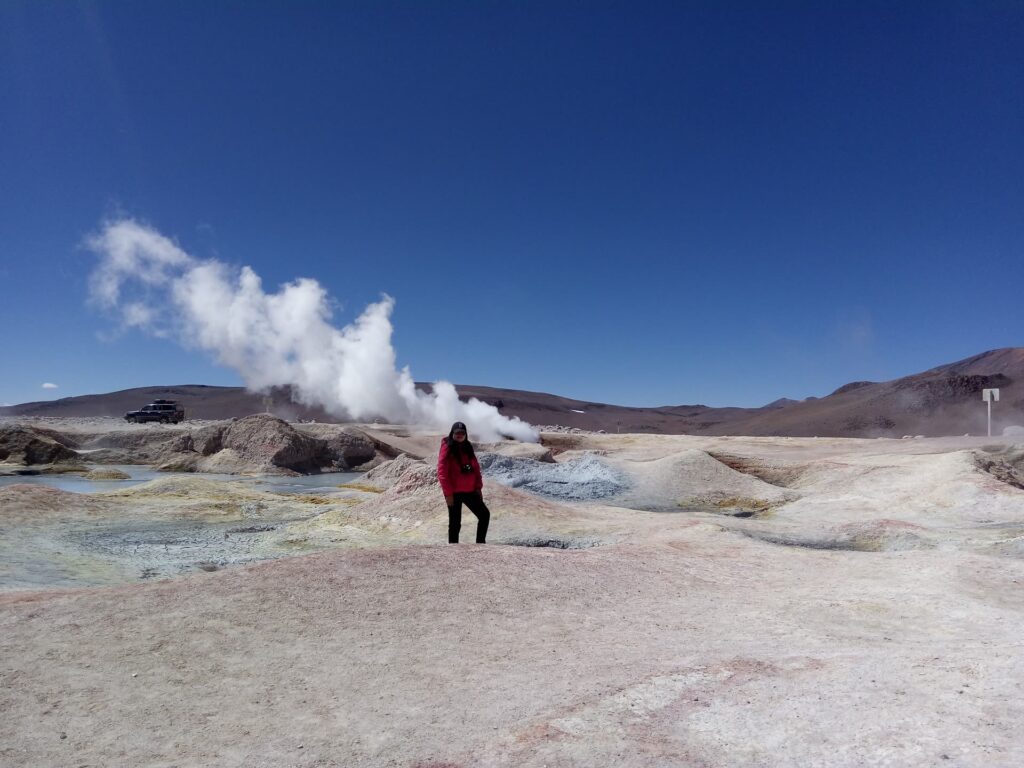
| Sol de Mañana geysers | About 4,850 m | Southern Lípez lodges, up to about 4,600 m |
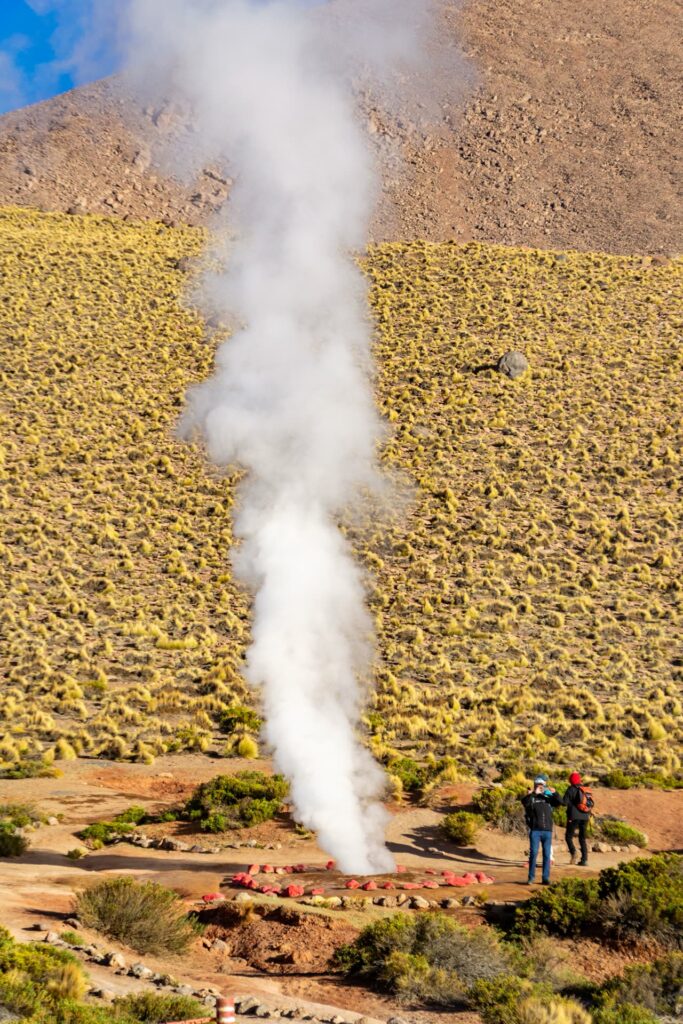
| El Tatio geysers | About 4,320 m | San Pedro de Atacama, about 2,400 m |
| La Raya pass, by train or road from Cusco to Puno | About 4,300 m | Puno, about 3,830 m |
| Laguna Colorada | About 4,280 m | Southern Lípez lodges, up to about 4,600 m |
| Machu Picchu | About 2,430 m | Sacred Valley or Cusco, both higher |
How our journeys handle altitude
All our journeys through the Andes follow the same idea: start low, go up in steps, and keep the highest nights for the end of the high part of the trip. You can load each of them in the planner above.
Peru and Bolivia
From Lima we fly to Cusco and drive straight down to the Sacred Valley, at about 2,870 m, for the first two nights. The CDC itself suggests this: travellers to Cusco and La Paz can sleep lower than the airport for one or two nights. The step up to Cusco, at about 3,400 m, is about 530 m, just over the 500 m guide, so the planner shows it in amber. That is still far gentler than sleeping in Cusco on your first night. From Cusco the route climbs about 430 m to Puno on Lake Titicaca, then comes down a little to La Paz and stays level in Uyuni. See it night by night in Peru & Bolivia Discovery (16 Days).
Bolivia to the Atacama Desert
The three-day crossing from the Uyuni salt flats to San Pedro de Atacama has the highest night of any of our routes: a lodge in the Southern Lípez, at up to about 4,600 m. It is up to about 940 m higher than Uyuni, so the planner marks it in amber. By then you have already spent around ten nights above 2,800 m. The next day you drop more than 2,000 m to San Pedro, at about 2,400 m. See it in Peru, Bolivia & Chile Expedition (21 Days).
Ecuador
Quito, at about 2,850 m, is where most trips to Ecuador begin, and flying in from sea level is already over the CDC’s first-day limit. Two nights in Quito come before the highest night, at a hacienda near Cotopaxi at about 3,600 m. After that the route comes down to Baños, at about 1,820 m. See it in Treasures of Ecuador & Galápagos Island Tour (14 Days).
Every journey can be adjusted. If you would like an extra night lower down, a slower start or a different order, our travel experts can redesign the route around you.
If you feel unwell at altitude
Symptoms of altitude sickness, such as a headache, nausea, dizziness or tiredness, usually start 6 to 10 hours after you arrive, according to the NHS. The guidance agrees on what to do:
- Do not go higher. The CDC advises never going up to sleep at a higher altitude with symptoms, however mild. Rest at the same altitude until you feel better. The NHS says symptoms usually improve in 1 to 3 days.
- Go down if it gets worse. If symptoms get worse, or do not improve after a day, the NHS advises going 300 to 1,000 m lower.
- Tell someone, and do not stay alone. TravelHealthPro advises never leaving a person with altitude sickness on their own.
- Get help at once for breathlessness even at rest, confusion or loss of coordination. These can be signs of the serious forms of altitude illness.
Who should see a doctor before going
- Anyone who has had altitude sickness before, or who will go up to high altitude quickly, should speak to a GP or travel clinic, says the NHS.
- The CDC advises people with heart or lung disease to see a doctor who knows high-altitude medicine before they travel, even if their condition is under control.
- Medicines such as acetazolamide need a prescription and are not suitable for everyone. TravelHealthPro notes it should not be used in pregnancy, especially the first trimester, or with a severe sulfa allergy.
Frequently asked questions
Is La Paz higher than Cusco?
Yes. The centre of La Paz is at about 3,650 m and Cusco at about 3,400 m. El Alto, where La Paz airport is, is at about 4,060 m. Puno, on Lake Titicaca, is higher than both at about 3,830 m.
Should I stay in the Sacred Valley before Cusco?
Yes, if you fly in from the coast. The Sacred Valley is about 500 m lower than Cusco, at about 2,870 m, so your first nights are lower and the step up to Cusco is smaller. The CDC suggests sleeping lower than the airport for one or two nights when you arrive in Cusco or La Paz.
Is Machu Picchu at high altitude?
Machu Picchu is at about 2,430 m, around 1,000 m lower than Cusco, and the town below it, Aguas Calientes, is at about 2,040 m. Most travellers find it easier than Cusco.
Do I need to acclimatise before the Uyuni salt flats?
Uyuni is at about 3,660 m, almost the same as La Paz, so arriving from La Paz adds very little. The three-day route south to Chile is different: its lodges are up to about 4,600 m, so it is best done at the end of your time in the high Andes.
Is the Atacama Desert at high altitude?
San Pedro de Atacama is at about 2,400 m, below the 2,500 m at which altitude sickness usually starts. Its day trips go much higher: the El Tatio geysers are at about 4,320 m and the altiplanic lagoons above 4,000 m.
Does Quito count as high altitude?
Yes. At about 2,850 m, Quito is higher than the 2,750 m that the CDC advises as the most for a first night after arriving from low altitude. It is within the NHS and TravelHealthPro limit of 3,500 m. Take your first day gently and keep higher places, such as Cotopaxi, for later.
Sources
- Rules: NHS, Altitude sickness; CDC Yellow Book 2026, High-altitude travel and altitude illness; TravelHealthPro (NaTHNaC), Altitude illness.
- Altitudes: town-centre elevations from Wikipedia, rounded, and hotel altitudes from the hotels. Checked on 5 November 2026.
Ready to Experience This Firsthand?
Our travel consultants design your itinerary around your dates, pace and hotel style.

Wilfredo Zúñiga Huamanguillas
Anthropologist & Hospitality Professional | South America Travel ExpertAnthropologist, hospitality professional and South America travel expert with 11 years of experience in tourism, trained at the Universidad Nacional de San Antonio Abad del Cusco. Wilfredo writes about the people, traditions and landscapes of the continent, from the Andes and Machu Picchu to Patagonia, Brazil and the Amazon.
More about Wilfredo →