The best time to visit Bolivia is the dry season, from May to October, when skies are clear, roads are open and the Uyuni Salt Flats show their famous white, hexagon-patterned crust. If you dream of the mirror effect on the salt flats, travel in the rainy season instead, usually from January to March. April is the best compromise: there is often still water on parts of the salt flats, with drier roads and fewer visitors.
Quick answer: May, September and October offer the best overall conditions for La Paz, Lake Titicaca and Uyuni. July and August are dry and sunny but the busiest and coldest at night. February and March are the months to chase the Uyuni mirror.
Bolivia’s seasons at a glance
| Season | Months | Best for | Keep in mind |
|---|---|---|---|
| Dry season | May – October | Clear skies, the white salt flats, the lagoon route to Chile, trekking, Lake Titicaca | Freezing nights on the Altiplano, especially June to August; peak demand in July and August |
| Shoulder | April and November | Fewer visitors, milder nights, a chance of water on the salt flats in April | Weather can change quickly in November as the rains begin |
| Rainy season | December – March | The Uyuni mirror effect, green valleys, festivals such as Carnival | Afternoon storms, some routes closed by flooding, wettest months in the Amazon |
Bolivia sits in the Southern Hemisphere and much of the country lies high in the Andes, so altitude matters as much as the calendar. The dry season is also winter: days are bright and mild, but temperatures fall sharply after sunset. The rainy season is summer, with warmer nights and most of the year’s rain.
Best time to visit the Uyuni Salt Flats

Uyuni looks completely different depending on the month, so choose your dates by the experience you want.
| Rainy season (Jan – Mar) | Dry season (May – Oct) | |
|---|---|---|
| Salt flat surface | A thin layer of water creates the mirror effect | Dry, white crust cracked into hexagons |
| Best photos | Reflections of clouds, sunrise and sunset | Perspective photos and endless white horizons |
| Isla Incahuasi | Often unreachable when the water is deep | Usually accessible, with its giant cacti |
| Coloured lagoons and geysers | Some days impassable after heavy rain | Normally open, including the route to Chile |
| Night temperature | Around 3–5°C (37–41°F) | Down to about −10°C (14°F) in June and July |
| Visitors | Busy around Carnival and New Year | Busiest in July and August |
April: the best of both
In April the rains have usually stopped but some parts of the salt flats may still hold water, so you have a chance of reflections while the roads, the island and the lagoon route are open again. Night temperatures in Uyuni average just below freezing (−1°C / 30°F), milder than in mid-winter.
The dry, high-altitude air also makes Uyuni one of the best places in South America for stargazing, especially on moonless nights in the dry season. Read more in our guide to visiting the Salar de Uyuni and our list of what to pack for Uyuni.

Bolivia weather by month
Average daily high and low temperatures for four regions travellers visit most. The highlands (La Paz and Uyuni) have cold nights all year, Sucre is mild and spring-like, and the Amazon lowlands are hot and humid.
| Month | La Paz (3,650 m) | Uyuni (3,680 m) | Sucre (2,890 m) | Rurrenabaque (204 m) |
|---|---|---|---|---|
| Jan | 18.5° / 7.4°C 65° / 45°F |
20.6° / 5.5°C 69° / 42°F |
21.6° / 10.6°C 71° / 51°F |
31.4° / 21.8°C 89° / 71°F |
| Feb | 18.7° / 7.3°C 66° / 45°F |
20.3° / 4.6°C 69° / 40°F |
21.1° / 10.4°C 70° / 51°F |
31.1° / 21.7°C 88° / 71°F |
| Mar | 18.9° / 7.2°C 66° / 45°F |
20.2° / 3.3°C 68° / 38°F |
21.5° / 10.1°C 71° / 50°F |
31.5° / 21.3°C 89° / 70°F |
| Apr | 19.2° / 6.3°C 67° / 43°F |
18.6° / -1.3°C 65° / 30°F |
21.5° / 8.8°C 71° / 48°F |
31.1° / 20.3°C 88° / 69°F |
| May | 19.1° / 4.6°C 66° / 40°F |
15.2° / -6.3°C 59° / 21°F |
21.7° / 6.4°C 71° / 44°F |
29.3° / 18.5°C 85° / 65°F |
| Jun | 17.8° / 3.3°C 64° / 38°F |
12.8° / -9.6°C 55° / 15°F |
21° / 4.5°C 70° / 40°F |
28.1° / 17.1°C 83° / 63°F |
| Jul | 17.4° / 2.8°C 63° / 37°F |
13.1° / -9.7°C 56° / 15°F |
20.7° / 4.1°C 69° / 39°F |
28.4° / 16°C 83° / 61°F |
| Aug | 18.4° / 3.7°C 65° / 39°F |
14.9° / -7.6°C 59° / 18°F |
21.8° / 5.4°C 71° / 42°F |
30.5° / 16.5°C 87° / 62°F |
| Sep | 19° / 4.8°C 66° / 41°F |
16.5° / -5.4°C 62° / 22°F |
22.6° / 7.3°C 73° / 45°F |
32° / 18.1°C 90° / 65°F |
| Oct | 19.8° / 6.2°C 68° / 43°F |
19° / -2.6°C 66° / 27°F |
23.2° / 9.1°C 74° / 48°F |
32.6° / 20.1°C 91° / 68°F |
| Nov | 20.4° / 7°C 69° / 45°F |
20.6° / 0.1°C 69° / 32°F |
23.1° / 10°C 74° / 50°F |
32.1° / 20.9°C 90° / 70°F |
| Dec | 20° / 7.5°C 68° / 46°F |
20.6° / 2.7°C 69° / 37°F |
22.4° / 10.5°C 72° / 51°F |
31.8° / 21.6°C 89° / 71°F |
Average monthly rainfall. Almost all the rain in the highlands falls between December and March, while the Amazon receives rain all year, most of it from November to April.
| Month | La Paz | Uyuni | Sucre | Rurrenabaque |
|---|---|---|---|---|
| Jan | 126 mm | 79 mm | 148 mm | 318 mm |
| Feb | 81 mm | 38 mm | 120 mm | 307 mm |
| Mar | 68 mm | 29 mm | 87 mm | 241 mm |
| Apr | 27 mm | 2 mm | 28 mm | 158 mm |
| May | 9 mm | 1 mm | 5 mm | 131 mm |
| Jun | 8 mm | 2 mm | 2 mm | 129 mm |
| Jul | 5 mm | 0 mm | 3 mm | 88 mm |
| Aug | 12 mm | 2 mm | 8 mm | 73 mm |
| Sep | 25 mm | 2 mm | 27 mm | 77 mm |
| Oct | 38 mm | 3 mm | 46 mm | 135 mm |
| Nov | 44 mm | 4 mm | 66 mm | 193 mm |
| Dec | 82 mm | 26 mm | 106 mm | 256 mm |
Source: SENAMHI (Bolivia’s national meteorology service), 1981–2010 climate normals; Rurrenabaque figures from SENAMHI records.
Month-by-month guide
| Month | Season | What to expect |
|---|---|---|
| January | Rainy | Mirror effect possible in Uyuni; frequent afternoon rain. The Alasitas fair begins in La Paz on 24 January. |
| February | Rainy | The wettest month in much of the country. Carnival, including the famous Carnival of Oruro, usually falls in February or early March. |
| March | Rainy | Rain begins to ease; still a good chance of the mirror effect. |
| April | Shoulder | Fewer storms, green valleys and fewer visitors. A good month for both faces of Uyuni. |
| May | Dry | Clear skies return and nights get colder. A very pleasant month for La Paz and Lake Titicaca. |
| June | Dry | Cold nights, sunny days. The Aymara New Year is celebrated on 21 June, with ceremonies at Tiwanaku. |
| July | Dry | Peak season and the coldest nights on the Altiplano. Book hotels and flights early. |
| August | Dry | Busy and dry, with strong winds on the high plateau. Independence Day on 6 August. |
| September | Dry | Excellent weather with slightly warmer nights and fewer crowds than July. |
| October | Dry | Warm days and good visibility; a favourite month for combining Bolivia with Peru. |
| November | Shoulder | The first rains arrive later in the month; mild temperatures. Todos Santos on 1–2 November. |
| December | Rainy | Rain becomes more regular, the landscapes turn green and the festive season begins. |
Best time to visit by region
La Paz and Lake Titicaca

La Paz and Lake Titicaca can be visited all year, but the dry season brings the clearest views of the snow-capped Cordillera Real, both from the city’s cable cars and from the islands of the lake. From May to October expect sunny days around 17–19°C and cold nights close to freezing. In the rainy months mornings are often clear and storms tend to arrive in the afternoon, so we plan outdoor visits early in the day. Nearby, the ruins of Tiwanaku are an easy stop between Lake Titicaca and La Paz.

Uyuni and the southwest
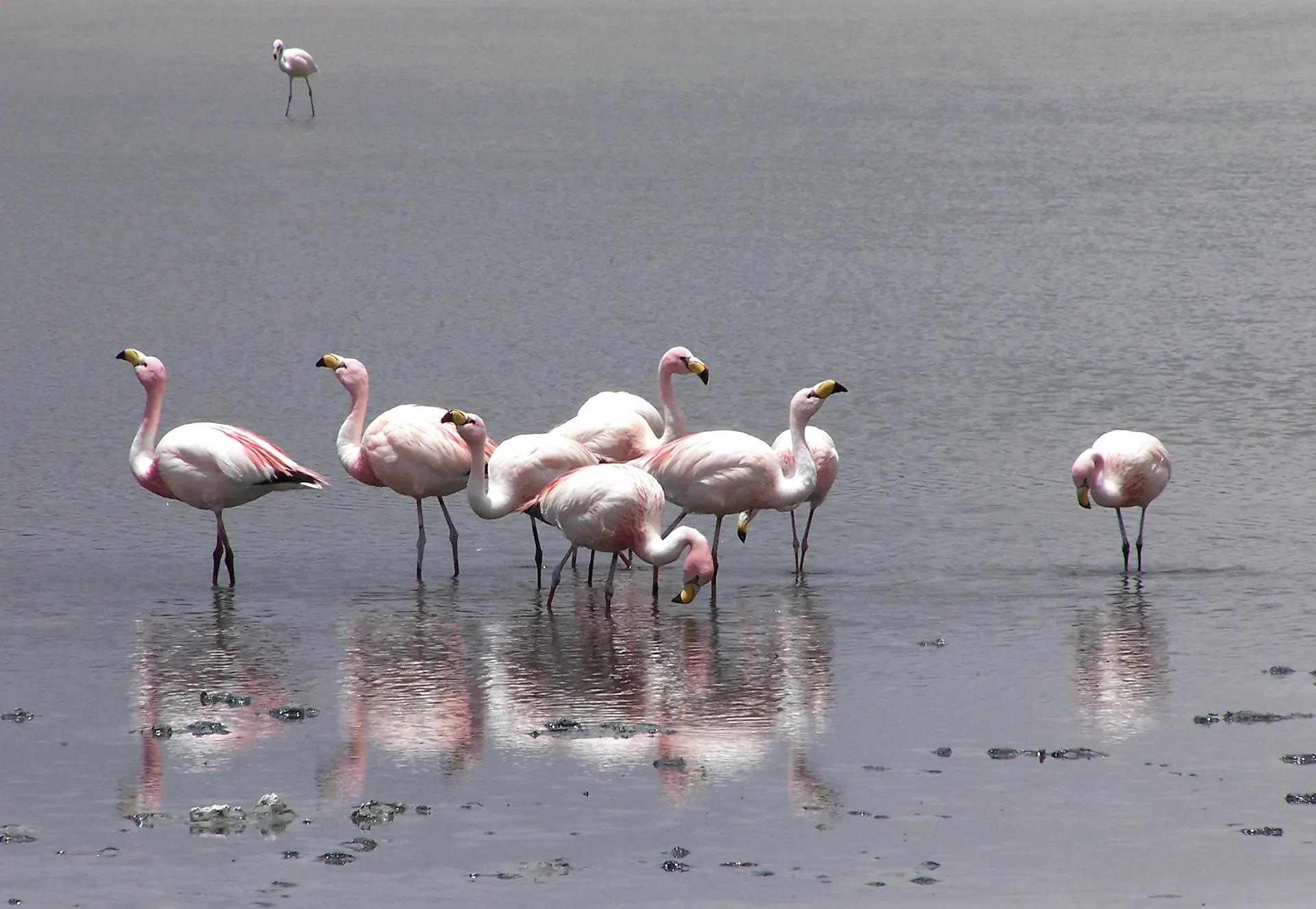
Beyond the salt flats, the southwest of Bolivia is a high desert of coloured lagoons, flamingos and geysers on the way to the Chilean border. The dry season is the most reliable time for this route, although the coldest nights of June and July and occasional winter snow can affect the highest passes, and heavy rain can close tracks between January and March.
Sucre and Potosí
Sucre, Bolivia’s white colonial capital, sits lower than La Paz at about 2,890 metres and enjoys mild days of 21–23°C all year. The dry months from April to October are the most comfortable for walking its historic centre and visiting the dinosaur tracks nearby. Potosí, one of the highest cities in the world, is cold year-round, so dress warmly whatever the season.
The Amazon: Madidi and Rurrenabaque
The Bolivian Amazon around Rurrenabaque and Madidi National Park is hot all year, with highs above 28°C. The dry season, roughly May to October, is the best time to visit: trails are less muddy, animals gather around rivers and lagoons, and July and August receive the least rain. Occasional cold fronts, known locally as surazos, can bring a few cooler days in the middle of the year. From December to March heavy rain can flood trails and disrupt flights.
Best time for activities
- Uyuni mirror photos: January to March, with April as a good compromise.
- Uyuni lagoon route into Chile: April to November.
- Trekking and climbing in the Cordillera Real (including Huayna Potosí): May to September, the most stable months.
- Mountain biking the Death Road (Yungas): possible all year, but safest in the dry season; in the rainy months fog, mud and landslides make it more hazardous.
- Wildlife in the Amazon: June to October.
- Stargazing: dry-season nights from May to October, ideally around the new moon.
Festivals and holidays
| Date | Festival | Where |
|---|---|---|
| From 24 January | Alasitas, the fair of miniatures and wishes | La Paz |
| February or early March | Carnival of Oruro, a UNESCO-listed folk celebration | Oruro |
| May or June | Gran Poder, a huge parade of dancers | La Paz |
| 21 June | Aymara New Year (Willkakuti), welcoming the winter sun | Tiwanaku and across the Altiplano |
| Night of 23–24 June | San Juan, with bonfires on the coldest night of the year | Nationwide |
| 5 August | Virgin of Copacabana | Copacabana, Lake Titicaca |
| 6 August | Independence Day | Nationwide |
| 1–2 November | Todos Santos (All Saints) | Nationwide |
| 8 November | Fiesta de las Ñatitas | La Paz |
Festival dates that depend on Easter or the Christian calendar move from year to year, and hotels in Oruro, La Paz and Copacabana fill up quickly around them, so ask us early if you want to time your trip with one.
Crowds and prices
July and August are the busiest months, combining the dry season with summer holidays in Europe and North America and winter school holidays in South America; hotels in Uyuni and the best tours book up first. Christmas, New Year and Carnival are also busy. For good weather with more space and availability, travel in May, September or October; for the best value, consider April or November.
What to pack for each season
- All year: sun protection (the sun is intense at altitude), sunglasses, a refillable water bottle, comfortable walking shoes and layers you can add or remove during the day.
- Dry season (May – October): a warm down jacket, thermal base layers, a hat and gloves for the cold nights, and lip balm for the dry air.
- Rainy season (December – March): a waterproof jacket, quick-dry clothing and, for Uyuni, rubber boots (often provided by tour operators) to walk on the flooded salt.
- Amazon: light long-sleeved clothing, insect repellent and a rain poncho.
Our travel tips for Bolivia cover money, altitude and practical details in more depth.
Altitude: plan your route as well as your dates
La Paz, Lake Titicaca and Uyuni all sit above 3,600 metres, and the lagoon route south of Uyuni climbs higher still. Whatever the month, the way you reach these places matters. Many travellers arrive overland from Peru: after the Sacred Valley, Machu Picchu and Cusco, the PeruRail Titicaca train continues to Puno, and from there the road crosses into Bolivia at Desaguadero, with a visit to Tiwanaku on the way to La Paz. By then you have spent several days at altitude and the high plateau feels far easier.
Combining Bolivia with Peru and Chile
Bolivia’s dry season matches the best months for Machu Picchu, which makes May to October ideal for a combined trip. Our 16-day Peru and Bolivia tour and the shorter 14-day Peru and Bolivia itinerary link Machu Picchu, Lake Titicaca, La Paz and Uyuni. To continue south, the Peru, Bolivia and Chile expedition crosses the salt flats and coloured lagoons into Chile’s Atacama Desert. For Peru’s seasons, see our guide to the best time to visit Peru.
Frequently asked questions
What is the best month to visit Bolivia?
For good weather across most of the country, May, September and October are excellent: dry, sunny and less busy than July and August. For the mirror effect on the Uyuni Salt Flats, choose February or March, or April for a mix of both.
When can you see the Uyuni mirror effect?
Usually from January to March, after rain leaves a thin layer of water on the salt. It depends on each year’s rainfall, so the effect can start in late December or last into April.
Is it worth visiting Bolivia in the rainy season?
Yes, if the Uyuni mirror is your priority or you prefer fewer crowds outside Carnival and New Year. Pack a rain jacket, allow some flexibility and expect some routes, such as the lagoon circuit, to change at short notice.
How cold is Uyuni at night?
In June and July average lows are around −10°C (14°F), and colder on the lagoon route. From December to March nights are milder, around 3–5°C (37–41°F). Bring thermal layers, a warm hat and gloves.
Is August too busy to visit Bolivia?
August is one of the busiest months, but Bolivia rarely feels crowded outside Uyuni. Book hotels and tours a few months ahead, or choose September for similar weather with fewer visitors.
When is the best time for the Bolivian Amazon?
The dry season, from about May to October, when trails are drier and wildlife is easier to spot. July and August receive the least rain.
How many days do I need in Bolivia?
Five to seven days cover La Paz, Lake Titicaca and two or three days in Uyuni. Combined with Peru, plan two weeks or more.
Planning a trip? Browse our Bolivia tours or tell us your dates and we will suggest the best route for that time of year.
Ready to Experience This Firsthand?
Our travel consultants in Cusco design your itinerary around your dates, pace and hotel style.

Wilfredo Zúñiga Huamanguillas
Anthropologist | South America Travel Expert | Cultural & Nature EnthusiastAnthropologist and South America travel expert with 11 years of experience in tourism, trained at the Universidad Nacional de San Antonio Abad del Cusco. Wilfredo writes about the people, traditions and landscapes of the continent, from the Andes and Machu Picchu to Patagonia, Brazil and the Amazon.
More about Wilfredo →